Robin Banerjee
  • Home
  • About
  • Articles
  • Videos
  • Books
  • Awards
  • Contact
  • Home
Robin Banerjee
  • Home
  • About
  • Articles
  • Videos
  • Books
  • Awards
  • Contact
Robin Banerjee
Robin Banerjee
  • Home
  • About
  • Articles
  • Videos
  • Books
  • Awards
  • Contact

@2022 – All Right Reserved. Designed and Developed by PenciDesign.

Budget2024
Articles

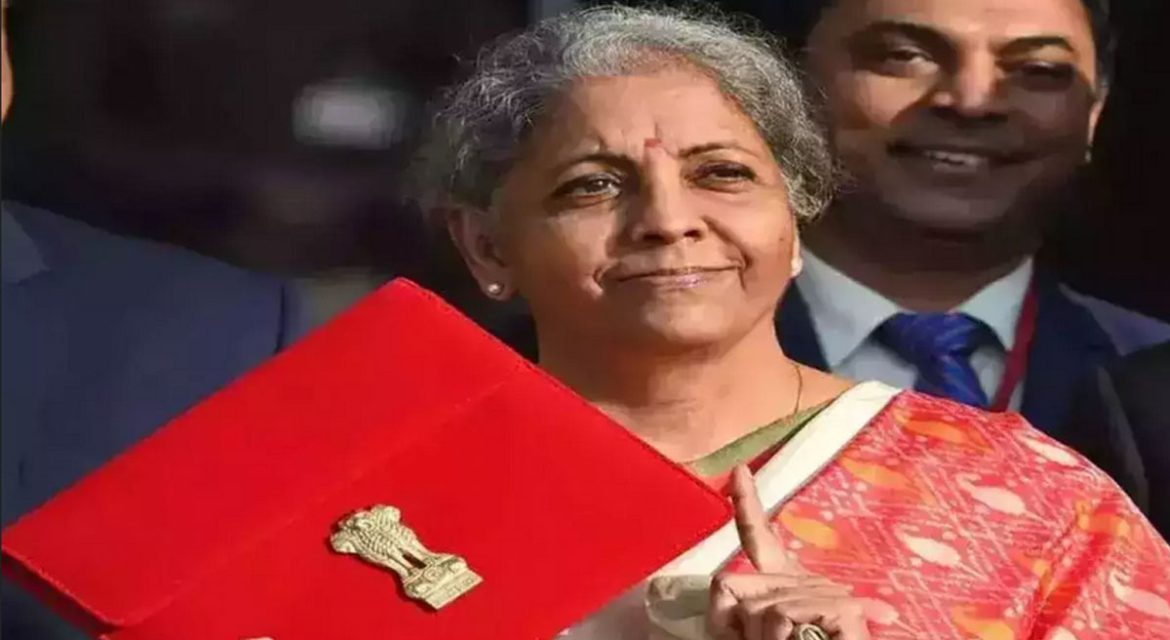
Interim Budget 2024-25: The BIG Picture

by Robin Banerjee February 5, 2024
written by Robin Banerjee

Why care for Budget speeches and their contents when the world across almost no-one cares? And more so when it is an ‘interim’ budget, meaning there will be a ‘final’ budget going forward. While these doubts are correct, the current interim budget is somewhat more special.

Let me highlight a few important guiding trends arising from this Union Budget.

Planning long term: This is an election year, which is around the corner. Who knows who will win? Doubts prevail in such scenarios. However, future uncertainties are not reflected in this document. The budget document focuses on creating an environment for the future devoid of significant new freebies.

The document assumes a nominal GDP growth of 10.5 percent, tax revenue growth of 11.5 percent, and fiscal deficit in 2025-26 at 4.5 percent. This is pushing economic achievement boundaries hard with an eye to the future.

Infrastructure is the foundation: No country has become a world beater without proper roads and rails. India has started focussing on it. Record-level capital expenditures have been planned. Spending almost Rs 9.50 lakhs in 2023-24, the government plans to spend another Rs 11 lakhs crore next year. What does this mean?

* Capex provides the economy’s largest multiplier effect – 2 to 3 times. Just imagine that spending of Rs 11 lakh crore capex could lead to a whopping increase of almost Rs 33 lakh crore to our national income, nearly two-thirds of the total annual budget number;

* Infrastructure-related capex reduces the cost of logistics, speeds up business, and reduces working capital deployment.

Financial environment is the king: The most talked about subject economists debate almost after every budget presentation is – ‘fiscal deficit.’ This interim budget is no different. A fiscal deficit implies how much the government is spending beyond its means. That is the difference between total revenue and total expenditure. How is it bridged? Essentially, by printing money. It could imply a price increase if more money chases the same goods.

Let me tell you, what’s the situation presented in the budget document.

The government is tightening its monetary belt and planning to lower fiscal deficits or money printing. This figure, which is likely to be Rs 17.3 lakh crore in 23-24, is planned to be Rs 16.8 lakh crore next year. This would mean the fiscal deficit being lowered from 5.8 percent to 5.1 percent in 24-25. Even during an election year, this is a sound practice; the government could have easily enhanced the deficit to provide more sops to the population. They desisted from this foolish act.

Bond pricing implication: A reduced fiscal deficit would lead to the government borrowing less to meet its expenses. This, in turn, is likely to reduce risk on government bonds. Leading to a possible reduction of yields in government bonds without possible reduction in the interest-policy rates. Given the possibility of slackening global interest rates, government bond yields could decrease significantly, translating into cheaper economic credit. This could lead to lower interest rates and more momentum for growth. This assumes the other macroeconomic factors remain under control.

Lowering interest costs indirectly is a great strategic move to provide long-term purchasing power in the people’s hands.

Stock market boost: The budget strategy is towards creating an eco-system to enhance the competitive power of the Indian economy, improving basic infrastructure, providing avenues for enhanced employment and reducing interest costs. These should all be music to the stock buyers.

While the global geo-political scenario continues to be challenging, the Indian stock market would remain buoyant, subject to occasional fluctuations.

Enhancing ‘nari shakti’: The better half of ourselves needs betterment to enhance competitiveness. While the budget did not enhance much towards the Ministry of Health and Family, it moved towards a better future for women. The strategic shift included:

* Promotion of vaccination of girls aged 9-14 years for the prevention of cervical cancer (we lose 75,000 women annually due to this deadly disease);

* Rs 21,200 crore allocated towards tackling malnutrition among children, adolescent girls, pregnant women, and lactating mothers;

* The ‘Lakhpati Didi’ scheme empowers women in rural areas to encourage them to start micro-enterprises, and training in skills such as plumbing, tailoring, etc, enabling them to earn at least Rs 1 lakh per annum. The target is to increase from 2 crore to 3 crore women ‘lakhpatis’.

Sectorial success strategy:

(a) Health is wealth: A significant strategy in this budget is to develop the pharmaceutical industry. It is one of the few industries which has a separate allocation for its development, assigning Rs 1300 crore next year, against spending of Rs 265 crore this year. It does not end here. Rs 1100 crore has been allocated for 2024-25 towards Biotechnology R&D. Health is wealth, after all!

(b)Tourism, a money spinner: Focus will shift to significant encouragement to the tourism sector, including religious tourism.

* Bottoms-up push:

The Indian states will be encouraged to make comprehensive development and marketing of iconic tourist centers at a global scale. This will lead to – local entrepreneurship, more employment, and Infrastructure improvements.

* Clean India means attracting more tourists.

The government will spend in total of Rs 12000 crore next year, over 25 percent increase of this year, on its Swachh Bharat Mission.

(c) Homes to Dream in: A major thought process is to provide housing to as many as are feasible. The plan includes –
* The middle-class community, who are generally trapped in rental chakravyu, will be provided with an additional 2 crores of houses to remove them from unauthorized colonies and slums.

* Solar rooftops to be provided to 1 crore households to get upto 300 units of free electricity every month, outlaying Rs 10,000 crore for 24-25. Sustainable living focussed upon.

What is missing?

No budget can be completely fulfilling. There will always be more demand for more allocation of funds. A few areas which could have been addressed are –

Private consumption slow growth: Private consumption, which is 60 percent of the economy, will grow at 4.4 percent in 2023-24 (last decade, it was around 6 percent). Barring the pandemic year, this is the slowest since 2002-2003. This shows that many of our society are unable to achieve their financial well-being.

Disinvestment needs more attention: This year, Rs 30,000 crore was budgeted to be recovered from disinvestments. But until January 24, only Rs 12,500 crore is done. This is not a good job. Next year’s target is Rs 50,000 crore, which is low considering the opportunity available. The government’s business is not to run businesses but to govern you and me!

Deficient education: Nations can grow well if their subjects are well-educated. We know that employable education in India is inadequate. The bad news is that in 2023-24, the government planned to spend Rs 1.16 lakh crore but ended up spending Rs 8000 crore short. This is not good. It must ensure that the budget for next year of Rs 1.24 lakh crore is not only spent, but well spent.

Income disparity: The income disparity between the rich and poor must be addressed. This can be bridged through a satisfactory old-age pension scheme and health insurance for all. While work is taking place in this area, significantly more should be done. The Budget did not focus on this crucial area.

Last few words

Nothing in this world is perfect. So is the Budget 24-25.

We all need to be happy. And the best number to assess is the per capita income of any nation. Providing free lunches will not lead to the growth of individual income. We all need to find good work to do, provided we have an eco-system to do so.

This provisional budget seems to be working towards this goal to make us happier!
Robin Banerjee

About the Author: Robin Banerjee is the Chairman of Nucleon Research Pvt Ltd, a global clinical research company. Earlier, he served as the Managing Director of Caprihans India Ltd. Robin has authored 3 bestselling business nonfiction books: (i) Who Cheats and How; (ii) Who Blunders and How; and (iii) Corporate Frauds: Bigger, Broader, Bolder.

Source: Economic Times (ETCFO.com)
ETCFO


February 5, 2024 0 comment
0 FacebookTwitterPinterestTumblrVKOdnoklassnikiLINEViber
Articles

Interim Budget and Healthcare: A bird’s eye view

by Robin Banerjee February 5, 2024
written by Robin Banerjee

Health has indeed found a major focus in the budget document. The government would spend on health Rs 90,000 crore in 2024-25, up from Rs 79,000 crore in 2023-24. Showing an increase of 14 per cent. Is it adequate or inadequate?

With 2024 having commenced, the memories of COVID have receded. But have you noticed that one of the COVID times habits of using face masks has remained amongst some of us, a habit that was non-existent earlier?

While times have become rather normal, an abnormal headache has emerged. Mental health illnesses are sweeping the world. You will perhaps be surprised to know that the World Health Organisation estimates that an estimated 12 billion workdays worth $1 trillion (~Rs 83 lakh crore) per year are lost due to depression and anxiety across the globe. Providing mental healthcare helps prevent long-term illness.

Given this background of the changing times, let us look into the Indian Government’s ‘Interim’ Budget in the ‘healthcare sector’. Though not the final budget, it will yet show the thinking that the government is enunciating.

Key strategic areas of healthcare thrust

Health has indeed found a major focus in the budget document. The government would spend on health Rs 90,000 crore in 2024-25, up from Rs 79,000 crore in 2023-24. Showing an increase of 14 per cent. Is it adequate or inadequate? You may decide from the enumeration below.

Let me now explain the big picture.

Health is wealth: A significant strategy in this budget is to develop the ‘pharmaceutical industry.’ It is one of the few industries with a separate allocation for its development, assigning Rs 1300 crore next year against spending of Rs 265 crore this year (it was almost non-existent earlier). The Pharma sector is one of the very few sectors the government has ever given a special strategic treatment. In addition, it is also spending heavily on PLI (provides incentives to industries to boost local production). A healthy mind and body are the ultimate power!

Nari Shakti is svaasth and sehath:

Prevention is better than cure: Cervical cancer is a deadly disease. India loses about 75,000 women owing to this illness. To prevent the catastrophe, the budget has planned to encourage the vaccination of girls between 9 and 14 years old. This will be done by making vaccines cheaper by including the human papillomavirus vaccine (HPV) in the country’s immunisation program.

Nutrition is key to health: An integrated nutrition supplier scheme has been planned. This is through the Saksham Anganwadi and Poshan 2.0 scheme. It is focused on children, adolescent girls, pregnant women, and lactating mothers. The scheme will involve a strategic shift in nutrition content and delivery and creating a convergent ecosystem to develop and promote practices that nurture health, wellness, and immunity. The scheme (budgeting Rs 21,000 crore) existed but was not working adequately. What the government is planning now is to reorganise it under the Poshan 2.0 scheme, pushing it into primary verticals like:-

Nutrition Support for children of 6 months to 6 years, pregnant women, and lactating mothers; and for adolescent girls between 14 to 18 years in Aspirational Districts and North Eastern Region;

Early childhood care and education [3-6 years] and early stimulation for (0-3 years).

Earning power provides good health: I have a friend with the ‘Adlakha’ surname. In olden times, anyone with even half a lakh was rather rich. They would get a title surrounding it. So were ‘lakhpatis’. The government, catching on to this terminology, had announced the ‘Lakhpati Didi’ scheme. Rather thoughtfully, the scheme empowers women in rural areas to encourage them to start micro-enterprises and training in skills such as plumbing, tailoring, etc, enabling them to earn at least Rs 1 lakh per annum. The target is to increase from 2 crore to 3 crore women ‘lakhpatis’. The strategy is to provide a fair income, leading to better living and health.

Health eco-system: Good health cannot be practiced unless the environment encourages us to remain healthy. It needs clean air, water, and an accessible medical system. Let us see how the current budget has focussed on eco-system building.

Bio-technology R&D: This is thinking of the future. It involves human resource development, bioinformatics, and biotech facilities. There is bad and good news. The not-so-good part is that this year (2023-2024), the government underspent its original budget of Rs 1350 crore, not spending even half of it this year. Ended up spending Rs 500 crore. The good news, it is still targeting a high number next year (2024-25), with a budget of Rs 1100 crore. Hope the government spends it usefully.

Technology usage hastens healthcare dispersal: The government plans to roll out the newly designed U-WIN platform for managing immunisation and intensified efforts of the Mission Indradhanush (immunisation for children).

In addition, the ‘Ayushman Bharat Digital Mission’ scheme exists to develop the backbone necessary to support the integrated digital health infrastructure. It will now extend to ‘anganwadi’ (women employed to provide additional healthcare) workers and helpers.

Cleanliness helps healthy living: The government will spend a total of Rs 12000 crore next year, delivering a 25 percent increase over this year, on its Swachh Bharat Mission.

Misses in Healthcare sector strategy

There is nothing on this earth that cannot be improved. So is the budget strategy in the healthcare sector. However, this sector would need some renewed efforts and certain strategic initiatives to make India the best place to live. Let me tell you the key areas which need quick focus (may the final Budget for 2024-25 consider these):

Shortage of Health Care personnel and centers: It is understood that there is almost a 10 per cent shortage in Primary Health Care Workers and over 50 percent in Community Health Care Centres. The worst is there seems to be over 75 per cent shortage of surgeons, physicians, gynecologists, and pediatricians in these rural centers. That’s a large shortfall. A lot more needs to be done by the government.

TB is a major risk: 3 out of every 10 TB cases in the world are in India. This needs immediate remediation.
Cancer, a major killer: A 2023 Lancet study shows India lost 9 lakh lives to cancer in 2019, the second highest among 49 Asian countries. This needs special focus.

Hospital beds not enough: It is understood that India needs another 25 lakh hospital beds. This would ensure that for many poor of our country, floors of hospitals would not become beds anymore.

Benevolent healthcare Regulator: The healthcare sector has a regulator in the form of NABH (a national accreditation body for healthcare providers). However, a government-sponsored Regulator overseeing the myriad of permissions, single window clearance, quality delivery, transparent pricing, etc., would make the healthcare delivery system credible and accessible. This must be implemented sooner rather than later to make a global standard health ecosystem.

Last few words

The strategy for a healthier India enunciated through the interim budget is laudable. India is getting into the groove of becoming a ‘developed’ country in the not-too-distant future. Health is wealth – is one of the most common adages. The government, together with the private enterprises, are trying to make this come true.

Some tinkering, a few broad strategic shifts, and a philanthropic healthcare regulator sponsored by the government would go a long way to making all of us healthy, wealthy, and wise!

(DISCLAIMER: The views expressed are solely of the author and ETHealthworld.com does not necessarily subscribe to it. ETHealthworld.com shall not be responsible for any damage caused to any person/organisation directly or indirectly).

By Robin Banerjee

About the Author: Robin Banerjee is the Chairman of Nucleon Research Pvt Ltd, a global clinical research company. Earlier, he served as the Managing Director of Caprihans India Ltd. Robin has authored 3 bestselling business nonfiction books: (i) Who Cheats and How; (ii) Who Blunders and How; and (iii) Corporate Frauds: Bigger, Broader, Bolder.

Source: ETHealthWorld

February 5, 2024 0 comment
0 FacebookTwitterPinterestTumblrVKOdnoklassnikiLINEViber
Articles

2024: Five big global trends affecting lives and buisnesses

by Robin Banerjee February 5, 2024
written by Robin Banerjee

Megatrends like continued trust in democratic processes, adverse climate change implications, risks from technology, middleclass behavioral shifts, and changes in health priorities, will redefine mankind’s domain (the earth).

The world has become less predictable. Ambiguity galore; risks many; possibilities immense.

Sitting at the precipice of 2024, it would be good to look at some megatrends you may expect to experience this year. Most of these will touch you and me in some way or the other.

Let me pick five big trends the world is likely to take.

1: Dance of democracy and test of its survival About half of the world’s adult population will go to the polling booths in 2024 in over 70 countries to choose their political bosses. Such large-scale democratic voting has never happened before. This polling exercise will happen when there is a growing sense of lack of liberalism and acute threats to democratic values.

The democratic action implications could be profound. Some of these polls will be fair, exhibiting people’s power, while many will be window-dressed to show a false sense of free will. There is every possibility that, in most countries, the parties in power would lose, and the anti-incumbency wave could prevail.

Two distinct trends could emerge from this dance of democracy.

One, most sitting political parties are expected to try and stick to power by offering various free bees. This would lead to deficit financing, leading to the printing of money, making economies inflationary.

Second, the influence of AI and deep fake videos will play a large-scale active role in many electioneering for the first time ever. This could severely disrupt human feelings, actions, and possible electoral outcomes. Free will, which is the hallmark of democratic structures, could fall apart, leading to a possible loss of faith in democratic processes in some geographies.~

2: Climate angst and uncertainties – inevitable warmer globe

The world is getting warmer, with climate uncertainties now an absolute certainty. 2023 was the warmest recorded in modern history.

The situation is so bad that even in January, Gulmarg, one of Asia’s highest ski resorts in our beautiful Kashmir, has no snow for skiing. This has never happened before in January. The local tourism industry is devastated.

The global average surface temperatures are already 1.1 deg C above pre-industrial levels. Hence, limiting the global temperature increase to below the desired level of 1.5 deg C is impossible.

Arising out of this, you may expect the following key trends in 2024:

One, climate conditions will remain uncertain. Expect sudden heavy rainfalls, floods, droughts, or uncomfortably hot summers. Agricultural activities and human lives could suffer badly.

Next, more and more investments in the renewable energy sectors, including wind, solar, and hydrogen. A lot of work will be on carbon capture technology. India is expected to invest $500 Billion (Rs 40 lakh crore) by 2030. Yes, that’s huge and could provide many economic opportunities in this sector.

3: Technology will keep posing risks and provide opportunities

The launch of generative artificial intelligence by OpenAI’s ChatGPT in late 2022 changed the perception of technology capabilities forever. It is a chatbot that responds to users’ queries and prompts. Unlike earlier technologies, generative AI is adaptive, practices speed learning, and possesses contextual understanding. While the internet has enabled us to disseminate information, AI is now helping mankind to assimilate data.
<p>Indian automotive manufacturers need access to cutting-edge semiconductors for electric vehicles, advanced driver-assistance systems, and other smart features.</p>
Indian automotive manufacturers need access to cutting-edge semiconductors for electric vehicles, advanced driver-assistance systems, and other smart features.

What trends can we expect in this domain?

One, many governments will bring in statutes to pre-authorize AI-related work. It may no longer remain an unfettered innovation with the potency to create havoc on human thoughts and actions.

Two, the semiconductor chip industry will work overnight to enhance the high bandwidth memory (HBM), the technology behind super-fast processing speeds and lightning-fast data transfers.

Next, 118 countries in COP28 promised to triple the world’s renewable energy capacity by 2030. Technology, for “green” hydrogen, will be the flavor. The use of electrolyzers to split hydrogen from water will grow worldwide. Globally, against an estimated 14GW capacity in 2022, investments will be made towards the 2030 requirement of 170GW of electrolyzer production capacity.

Cyber crimes are one of the most potent dangers from technology we all face. AI is trying to mitigate some of its risks. While AI can analyze attacks and malware to create automated defenses, it cannot fully mitigate the risks. Hence, another trend would involve traditional means of fraud detection, including forensic auditing, reinforcing itself.

4: Health is wealth – with a fresh paradigm

The world is aging. But the broader healthcare expenditure seems to be no longer the biggest concern of governments – unfortunately though. For instance, the OECD countries’ healthcare spending as % of GDP is flattening from about 9.5 percent in 2020 and 2021 to 9 percent in 2022. In India, government healthcare expenditure is at 2.1 percent of GDP in 2023, up from 1.6 percent in 2021.

Healthcare trends are many.

While the overall healthcare number is flattening, one sector is making waves – it is anti-obesity. World over 1 billion people, or 14 percent, are obese. For decades, weight loss drugs have been delivering disappointing results. The recent arrival of a safer solution is music to many ears.

Novo Nordisk and Eli Lilly will be battling for pole position in this sector in 2024. The blockbuster drugs are Wegovy (semaglutide) and Mounjaro (tirzepatide). Over 70 other obesity treatments are in progress. The solution is mostly glucagon-like peptide 1 (GLP-1) agonists. They work for weight loss by slowing down the rate of “gastric emptying,” keeping people fuller for longer. In 2024, more data on obesity drug health impact will be available, pushing the case for prescribing these drugs.

Another trend for this year is tremendous consumer interest in ‘nutraceuticals’. Even in weight-loss areas, a nutraceutical like konjac fibers is becoming popular as it amplifies the body’s gut-peptide systems. Chewing gums and lozenges, are getting high-tech and health-related. These health aids do many things: fight cavities, cure infections, and soothe ulcers.

And the evolution of chewing gum from a sticky-sweet into a “nutraceutical”— is driving sales. The $4 billion Indian market is growing at an unimaginable rate of 22 percent. The global market size is $150 billion, with the market growing at 8 percent every year. Essentially, huge opportunity windows are opening.~

With mental health disorders rising (4.5 percent of the global population is affected), another trend involves the large number of companies investigating how food or nutritional supplements affect the mind. Brains, the most complex and energy-demanding of the body’s organs, have specialized nutritional needs. Welcome, 2024, to the new field of ‘nutritional psychiatry’!

Many clinical trials are being carried out, especially in India, to prove the efficacy of nutraceuticals. With its galloping popularity and approvals through proof of concept, the market is multiplying manifold.

5: Middle-class aspirational upsurge

Globally, 45 percent of the population are middle-income (earnings between $11 to $110 per day), with 3.7 billion of them driving consumption of $44 trillion. As more people move out of poverty, this size will grow to 5 billion by 2030, spending $62 trillion annually. This change is simply mammoth. The world becomes richer as science, technology, and healthcare progress.

As regards India, it would drive almost one-fifth of the global growth. Here, the middle-class clan will be the focus. According to research (Financial Times, May 2023), India has about 430 million middle-class (annual household income between Rs 5 lakh and Rs 30 lakh)— about one in every three people.~

It means that India will have the upward moving ‘aspirers’ into the middle class, who would not just buy the same stuff, but also consume more premium and newer categories.

Historical evidence shows that the aspirational middle class majorly drives economies. It is stated that the upper classes are the nation’s past; the middle class is its future.

With India being the fastest-growing large economy, three-fourths of the economic growth will come from the middle-income population.

2024: Business and Finance Ahead of Us
Explore the optimistic financial forecast for India in 2024 by seasoned finance expert Robin Banerjee. From increased loan availability to a rising stock market, Banerjee provides insights into the potential economic landscape. However, he cautions against global risks that could impact India’s trajectory.

Last few words

Human habits and most economic trends do not arise abruptly. It develops over a period of time. However, a few of the trends, like continued trust in democratic processes, adverse climate change implications, risks from technology, middle-class behavioral shifts, and changes in health priorities, will redefine mankind’s domain – the earth.

Seasoned Business Expert Robin Banerjee

Our behaviors and beliefs are imperceptibly changing, sometimes for good and many times for the worse. Such is the story of human evolution!

About the Author: Robin Banerjee is the Chairman of Nucleon Research Pvt Ltd, a global clinical research company. Earlier, he served as the Managing Director of Caprihans India Ltd. Robin has authored 3 bestselling business nonfiction books: (i) Who Cheats and How; (ii) Who Blunders and How; and (iii) Corporate Frauds: Bigger, Broader, Bolder.

Disclaimer: The views expressed are solely of the authors and ETCFO.com does not necessarily subscribe to it. ETCFO.com shall not be responsible for any damage caused to any person/organisation directly or indirectly.

Source: Economic Times (ETCFO.com)

ETCFO


February 5, 2024 0 comment
0 FacebookTwitterPinterestTumblrVKOdnoklassnikiLINEViber
Newer Posts
Older Posts

About

Robert Banerjee

Seasoned finance expert, Robin Banerjee, Chairman of Nucleon Research Pvt Ltd, a global clinical research company. Prior to the present role, he served as the Group Chief Financial Officer of Suzlon Energy, Executive Director at Essar Steel and Thomas Cook.

@2025 - All Right Reserved.

Designed and Developed by Digital Sharp Mind

Robin Banerjee
  • Home
  • Blog New
    • Articles
    • Technology
    • Travel
    • Sports
  • Videos
  • In News Trending
  • About Me
  • Contact Me
Robin Banerjee
  • Home
  • About
  • Articles
  • Videos
  • Books
  • Awards
  • Contact
@2025 - All Right Reserved.

Designed and Developed by Digital Sharp Mind