
Robin Banerjee
  • Home
  • About
  • Articles
  • Videos
  • Books
  • Awards
  • Contact
  • Home
Robin Banerjee
  • Home
  • About
  • Articles
  • Videos
  • Books
  • Awards
  • Contact
Robin Banerjee
Robin Banerjee
  • Home
  • About
  • Articles
  • Videos
  • Books
  • Awards
  • Contact

@2022 – All Right Reserved. Designed and Developed by PenciDesign.

Articles

2024: Business and Finance Ahead of Us

by Robin Banerjee January 2, 2024
written by Robin Banerjee
“The future is always uncertain. But if you are in India, there is every reason to believe that the fresh year belongs to India, this decade characterizes our country, and this century has its place cut out for our motherland”- Robin Banerjee, a seasoned finance expert. As you read this piece at the threshold of 2024, things in India look rather optimistic – stock markets are flying high, and GDP is growing the fastest among the large economies. However, the rest of the world is going through some very turbulent times – major ongoing wars, GDP growth tottering, and inflationary situations troubling most economies. As we enter another fresh year, the paramount question in our minds is – what does 2024 hold for us? Given the present known in the unknown future, let me try to answer. WHAT 2024 HOLDS FOR US Will loan availability become easier? Yes. The Indian banking sector is in good shape. Much more ready to fund than it has been in the recent past. Indian banks’ weak loans (NPAs) are down to a 10-year low of 4.5% this year and are projected to drop to 3.5% next year. This strengthens banks’ balance sheets, enabling them to lend more. The RBI’s recent move requiring financial institutions to allocate more capital against unsecured consumer credit loans is a good signal to tighten whenever things look risky. More such steps will be seen whenever the RBI feels the banking system is taking undue risks. In addition, specialized banking players and fintechs are prompting improvement in the availability and servicing of funding. Enough money is available if you have a good project and have shown good past behaviour. Will interest rates come down? Yes. You may expect a reduction of interest rates in India in slabs. With inflation under control, it is reasonable to expect that interest rates will be down by about 0.75% to 1.25% by the calendar year end, with the midyear reduction of about 0.5%. The US interest rates are likely to reverse, too, as it seems it has reached its peak. Will inflation rise in 2024? This would incidentally mean that the bank interest rates (when you are a depositor) may also fall. Hence, it could be a good idea to lock some of your savings in fixed deposits at current rates for at least one year, if not more. Will inflation rise? No. India’s retail inflation, which is measured by the consumer price index (CPI), which analyses the retail inflation of goods and services in the economy across 260 commodities, was at 5.6% in November 2023. For your information, in the last two years, CPI hit the highest of 7.8% in April 2022 and the lowest of 4.1% in Jan. 2021. It is expected that inflation will hold at around 5.5%-6.0% in 2024. In this assumption, a major factor will be the monsoon in India. We have had a fairly good monsoon for the past eight years. The calculations could go haywire if El Nino or climate change affects us. Will the Stock Market keep rising? Yes. The Indian economy and its companies are galloping. As you read this piece, the BSE index is around 72,500, and the Nifty is around 21,500. You may expect a 10% rise from this level by the year’s end. BSE index by December 2024 is expected to be around 78,000 – 80,000, and Nifty around 23,000 to 24,000. Technology stocks will be an added flavour for 2024. Please note that stocks will keep oscillating but with an upward bias. Just for your information, the BSE index has risen nine times in the last ten years. This makes the Indian stocks one of the most expensive at an average P/E multiple of 23, with the USA multiple at 22. Given that India would be the island of growth in the world in the short and medium term (with China slowing down on its track), global investors will necessarily have to chase Indian stocks. This is in addition to the Indians continuing to pour their savings through SIP mode, which they love. Will the Indian rupee weaken a lot? No. When comparing the Indian rupee with the US dollar, tracking the USD performance is paramount. If the US dollar weakens, then the rupee will strengthen. The US Central Bank is giving enough hints that they will cut interest rates in 2024 by 0.75%. If this happens (which is very likely), investors will allocate less to USD holdings and divert funds to Indian markets, strengthening the INR. In addition, with the Indian economy doing well, many overseas investors will chase the Indian equity and debt markets. This will again lead to the relative strengthening of the rupee. In addition, RBI’s occasional interventions will continue, with their unstated intent of depreciating the rupee by at least 3% to 5% every year to keep Indian exports competitive in the global market. Considering the scenario, the rupee, which is around 83 for one USD as you read this piece, will likely be between 85 and 87 by the year’s end. Will crude oil prices rise? No. Looking at Brent crude (considered the major global benchmark for oil), its price fluctuated during 2023 from $93 to its lowest of $71 per barrel. As of now, it is hovering around $80. The demand will remain weak in the likely global scenario, with China’s ongoing slump, the European economy struggling, and higher electric vehicle adoption. However, oil supplies will keep flowing with US production booming, Iran and Brazil pumping out more, offsetting the OPEC production cuts and Russian supply reduction. Given this background, crude prices will likely range between $75 and $85 per barrel. Goldman Sachs predicts an average of $81 in 2024, and S&P Global estimates $85. In essence, no significant crude price rise is expected in 2024. While India’s story looks upbeat in the face of global uncertainties, the projections for 2024 are beset with certain risks. RISKS While India’s story looks upbeat in the face of global uncertainties, the projections for 2024 are beset with certain risks. The main ones are: Global warming Bad weather incidences, leading to famine or floods, can make every forecast useless; Terror attacks: A few mad guys can turn the world topsy-turvy; Big frauds, defaults Corporate India looks sound as of now. But any big fraud news or bank defaults could result in a somersault in the positive sentiments; China at war The Chinese Premiere’s mind is complex to conjecture. However illogical it could look, an attack possibility on its neighbors cannot be eliminated. This could be highly destabilizing. Political instability In 2024, more than half the world’s population will be up for democratic process – 70 countries with over 4 billion people. We know fully well that many will neither be free nor fair. FEW LAST WORDS It is the past and the present that help us to plan for the future. This is what I have attempted. The future is always uncertain. But if you are in India, there is every reason to believe that the fresh year belongs to India, this decade characterizes our country, and this century has its place cut out for our motherland. Now, enjoy the journey, which would, of course, have potholes and craters to navigate. About the Author: Robin Banerjee is the Chairman of Nucleon Research Pvt Ltd, a global clinical research company. Earlier, he served as the Managing Director of Caprihans India Ltd. Robin has authored 3 bestselling business nonfiction books: (i) Who Cheats and How; (ii) Who Blunders and How; and (iii) Corporate Frauds: Bigger, Broader, Bolder. Source: Economic Times (ETCFO.com) ETCFO    
January 2, 2024 0 comment
0 FacebookTwitterPinterestTumblrVKOdnoklassnikiLINEViber
Videos

Robin Banerjee On His Book ‘Who Blunders And How’ | IBLF 2023 – Pune Chapter

by Robin Banerjee December 25, 2023
written by Robin Banerjee


December 25, 2023 0 comment
0 FacebookTwitterPinterestTumblrVKOdnoklassnikiLINEViber
Articles

What can Businesses learn from World Cup Cricket 2023?

by Robin Banerjee November 23, 2023
written by Robin Banerjee

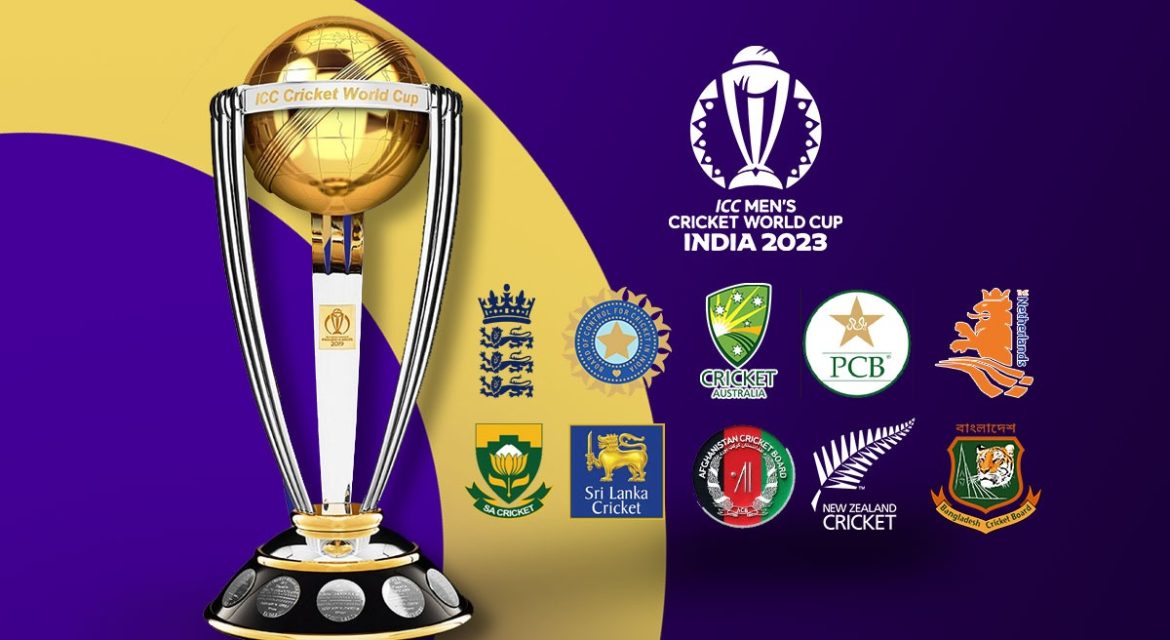
During the last six weeks, the cricket World Cup was the most talked-about and watched spectacle in India. Cricket has a massive global fan following of 2.5 billion, second only to football, with ever-swelling TV revenue. It is played in 87 countries. Even the Olympics could not ignore the keen interest, including it in the 2028 edition, giving business and sports a bonanza.

In fact, the cricket world-cup has thrown in a lot of lessons for business folks. Let us look at some of the key learnings.

  1. Accept risks and unpredictability as unavoidable: India had a dream run to win ten continuous matches. Just the last match was left to be conquered. The unofficial bookies were betting heavily in favour of India while playing the final against Australia, whom they had already beaten in the preliminary matches. But the result turned out to be just the reverse. On the final day, India succumbed rather tamely. The near unforeseeable happened: India lost in the final!

Business scenarios are similar. From where the situations could change, no one can predict. Take the climate change instances of late. During the recent 2023 summer, the climate change effects have been mammoth heat waves, floods, wildfires, droughts, heavy rains, extreme storms had cropped up almost everywhere. Most of the havoc created was not predicted. Whatever business you could be in, risks and uncertainties are the order of the day.

  1. Superiority does not result in winning: India was clearly a superior team throughout the tournament. They beat the hell out of most teams as Team India bulldozed one after another during the round-robin and the knockout stages. They inflicted one of the heaviest crushing of the ex-World Champions Sri Lankan team. In fact, its Sports Minister was so angry with the outcome he sacked the entire national cricket board. But, in the end, Australia won, which had, in fact, lost 2 of the 10 matches played before the finals. They were clearly not a superior team but took
    the winners trophy.

This is also true in the real world. I feel that the world’s best car manufacturers are the Mercedes and BMW of Germany. But they are not the top 5 players in the auto world. You will argue that they focus on niche products, but that’s untrue. These companies tried with smaller and cheaper varieties and tried to outsmart the largest car companies like Volkswagen and Toyota, but without much success. Superior products did not lead to the Merc or BMW grab the winner’s tag. Several reasons can be attributed, including not-so-world-class financial management, inappropriate working capital control, lack of top-notch cost consciousness, and inadequate sharp marketing. It takes more than superior health to win any race.

What can Businesses learn from World Cup Cricket 2023?

  1. Psych your opponents: Imagine how Australia could beat the formidable Indian team. Indian players believed that they were invincible. Australia worked for hours to view the video recordings on the weaknesses of the Indian batters and how each Indian bowler bowls. Indian players took it rather lightly and easily. The Aussies played psychological game, making the Indian team believe that Australia is easily beatable, but the truth was something else.

Have you noticed in business that a competitor suddenly poaches a key man, perhaps the head of R&D? This destabilizes the earlier employer. The ex-employer wouldn’t know how many formulations and future plans its ex-employee would have stolen and handed over to the competitor. This is very unnerving. Forget about new formulas; the competitor is playing a psycho game to outwit its competition. It has happened at least twice in my life while managing manufacturing outfits. You may have encountered similar mental games, too.

  1. Confidence and belief are key: The reigning World Cup ODI champion team – England – finished almost at the bottom of the table. Their rock bottom moment was when they lost to the cricket minnows, Afghanistan by 69 runs and by 8 wickets to the struggling Sri Lankan team. What’s the reason? Lack of confidence and belief is the key cause, blamed the former England captain Eoin Morgan. Can you believe that just about a month ago, the English team had beaten New Zealand 3-1, but yet the team’s performance has been disastrous! Teams must be relaxed and confident for a side to play well. The English team management kept chopping and changing. When confidence gets knocked, you need to be reassured.

In business, the story is similar. You are aware that 7 out of 10 startups are unsuccessful. If you go for a deep dive into these unsuccessful ones, you would generally notice that it boils down to their doubting self- belief about the business plan they are dealing with. They would themselves not be fully confident in implementing what they have started with. And this is the problem in most struggling businesses.

  1. Silos kill: This World Cup did not have the Calypso Kings, the West Indies playing. The cricket world cup without its ex-Champions is unthinkable. The team lost during the qualifying games, even to the minnows like the Netherlands, Scotland, and Zimbabwe. Why this pathetic situation? The reasons are plenty. But the profound one is that the players preferred playing T20 leagues worldwide to enrich themselves rather than practicing for the ODI World Cup. The players were individually brilliant to be invited by many teams to slog on their behalf, but they failed to practice as a team for the 50-over ODIs. The silo approach cost them dearly.

This compartmentalized phenomenon, resulting in the lack of sharing information with team members, is rather common in the corporate world. You may have noticed often that the left hand will not know what the right hand is doing. The manufacturing team may not know what the R&D team is formulating, or the R&D team may not know what the Sales team is looking for in customer satisfaction. The Silo approach is a recipe for corporate disaster.

Few last words

Cricket in India is a money spinner. Even Saudi Arabia wants to invest over $5 billion stake in the Indian Premier League, international cricket’s most lucrative event. After golf and football, cricket for Saudi Arabia is the next sports haven to make good money – and that’s a crucial learning.

Team games like cricket teach a lot. While the whole of India is lamenting the eventual outcome (India not winning the cup), we should not miss the lessons the spectacle has taught the business world. Business success, after all, is about being customer-focused, diligent, patient, ethical, and using common sense that is uncommon. This World Cup cricket, as in most other group games, demonstrates exactly that.

About the Author: Robin Banerjee is the Chairman of Nucleon Research Pvt Ltd, a global clinical research company. Earlier, he served as the Managing Director of Caprihans India Ltd. Robin has authored 3 bestselling business nonfiction books: (i) Who Cheats and How; (ii) Who Blunders and How; and (iii) Corporate Frauds: Bigger, Broader, Bolder.

Source: Economic Times (ETCFO.com)
ETCFO

November 23, 2023 0 comment
0 FacebookTwitterPinterestTumblrVKOdnoklassnikiLINEViber
Newer Posts
Older Posts

About

Robert Banerjee

Seasoned finance expert, Robin Banerjee, Chairman of Nucleon Research Pvt Ltd, a global clinical research company. Prior to the present role, he served as the Group Chief Financial Officer of Suzlon Energy, Executive Director at Essar Steel and Thomas Cook.

@2025 - All Right Reserved.

Designed and Developed by Digital Sharp Mind

Robin Banerjee
  • Home
  • Blog New
    • Articles
    • Technology
    • Travel
    • Sports
  • Videos
  • In News Trending
  • About Me
  • Contact Me
Robin Banerjee
  • Home
  • About
  • Articles
  • Videos
  • Books
  • Awards
  • Contact
@2025 - All Right Reserved.

Designed and Developed by Digital Sharp Mind